Building the Swimming Facilities of the Future – Sustainable, Robust and Energy-Efficient
Building the Swimming Facilities of the Future
SAPA by Hydro spoke with Jesper Appelquist, Head of Swimming Facilities at NCC, about material choices, sustainability, and the future of aquatic centers. With many years of experience in designing and building swimming facilities, Jesper shares his insights into what it takes to create facilities that stand the test of time – both technically and environmentally.
Swimming facilities are exposed to extreme conditions with high humidity, chlorine, and major temperature variations. What building systems and materials work best in these environments?
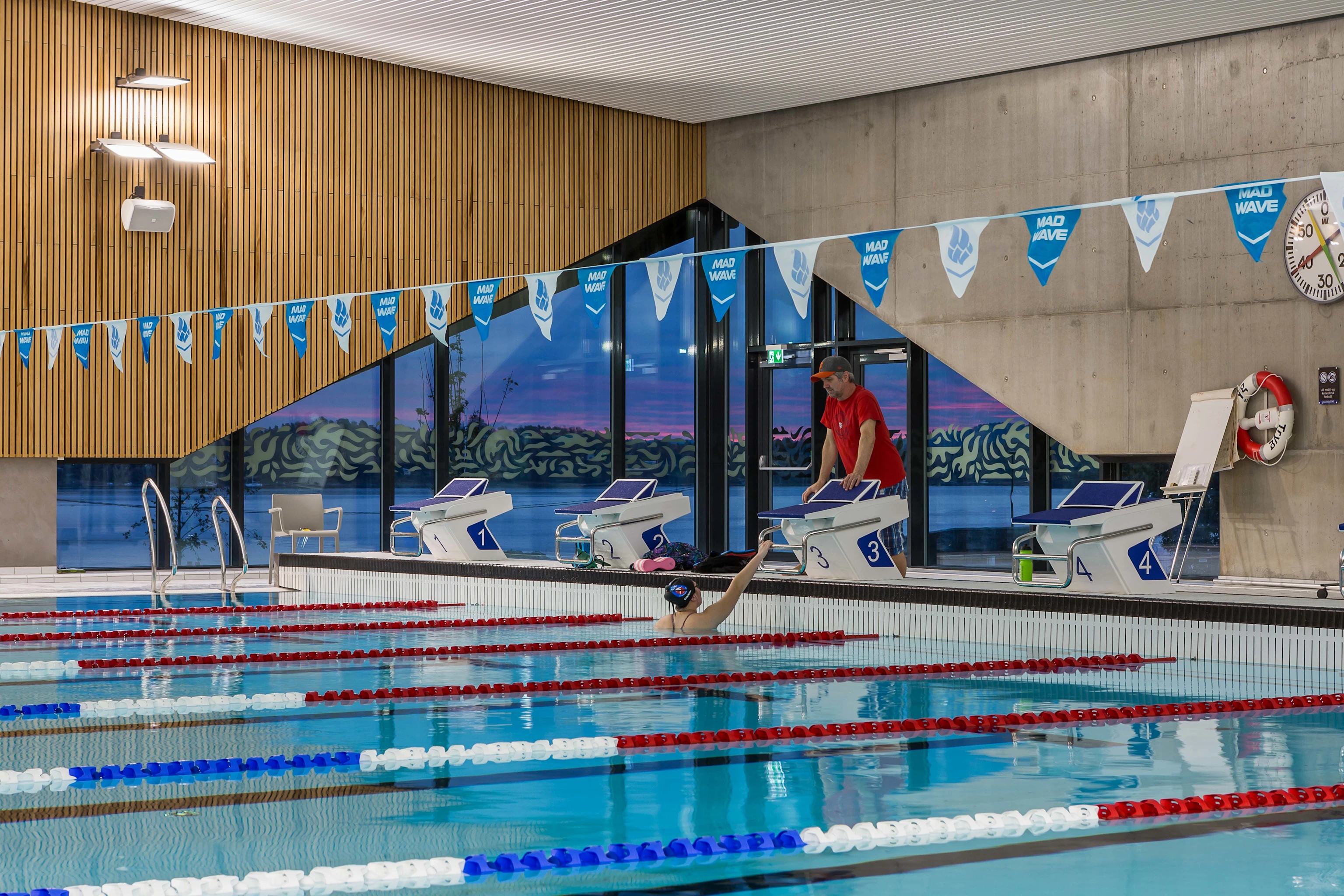
– “Swimming facilities are very special environments,” says Jesper Appelquist. “The combination of high humidity, chlorine, and temperature fluctuations places great demands on both materials and construction.”
Concrete has proven to be an excellent material for this type of environment thanks to its robustness and durability. However, even concrete is affected over time, so it’s important to use the right technical solutions and well-planned maintenance to extend its lifespan.
– “Aluminium systems also perform well, especially when combined with the right surface treatments, such as anodising and powder coating. Few materials are completely unaffected, but with the right combination, you can create long-lasting and durable solutions,” Jesper explains.
What characteristics are most important for materials that need a long lifespan and minimal maintenance?
– “Above all, the materials must withstand the tough environment of high humidity and chlorine,” says Jesper. “At the same time, they must be robust enough to handle mechanical stress and daily wear and tear.”
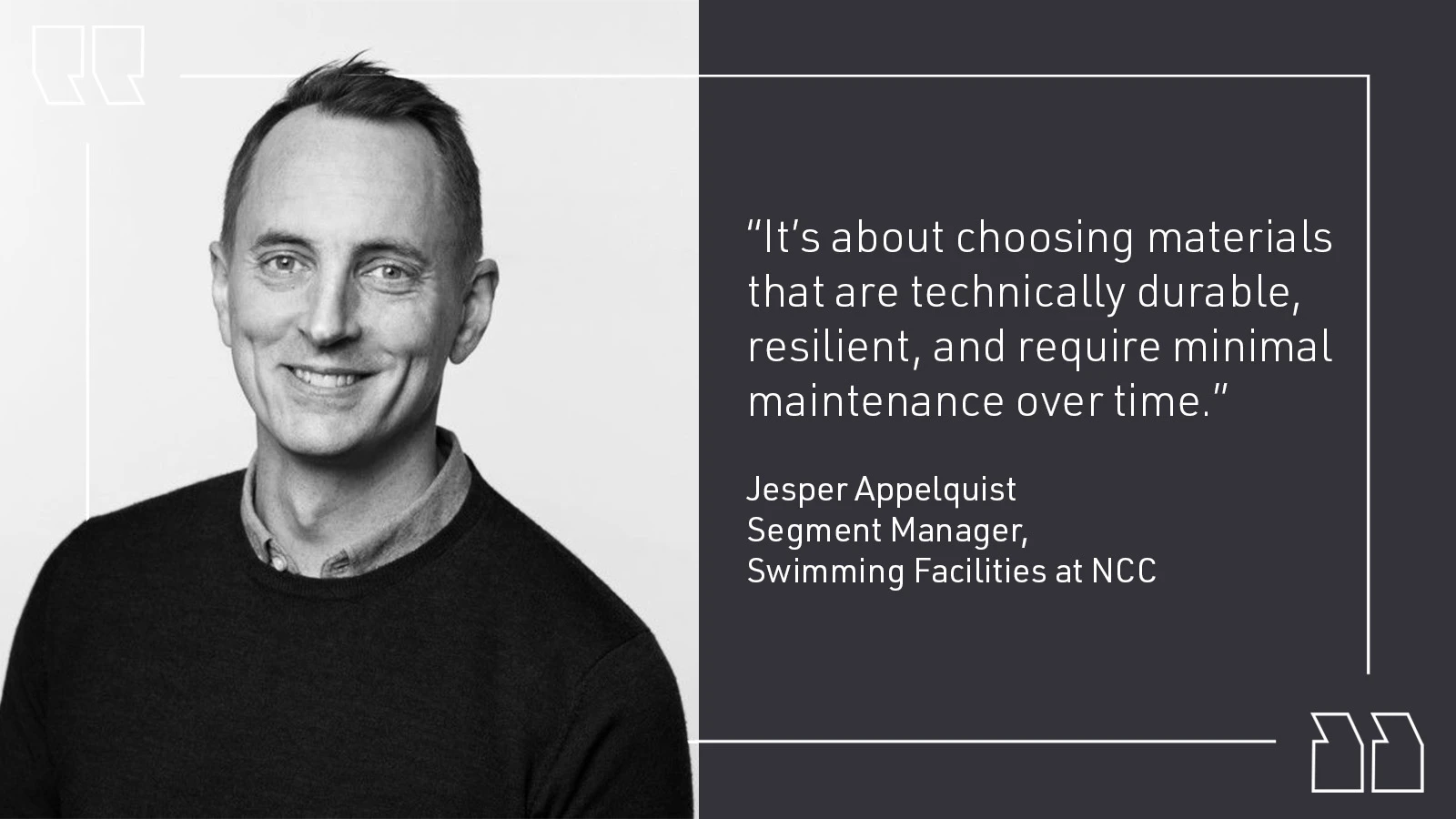
It’s about choosing materials that are technically durable, resilient, and require minimal maintenance over time.
How do you view the use of circular building systems or recycled materials, such as aluminium, in your projects?
– “That’s definitely something we take into account,” Jesper says. “Recycled aluminium is a climate-smart choice, and we often discuss sustainability goals with our clients as early as the planning phase.”
Finding the right balance between environmental ambitions and project economy is essential – after all, the client must pay for it.
– “The goal is to meet climate targets in a way that’s sustainable in the long run – both technically and economically,” he adds.
What future innovations or material trends do you see as important for the next generation of swimming facilities?
– “I think we’ll see major progress in climate-smart concrete,” Jesper predicts. “The research around replacing cement with alternative binders and using carbon capture (CCS) in concrete is very exciting. Once the technology becomes more established and cost-effective, it will have a huge impact.” He continues:
– “At the same time, the industry is looking increasingly at organic materials like wood, even in load-bearing structures. But in swimming facilities, that’s a challenge, because wood is heavily affected by moisture over time. Aluminium will continue to play an important role – especially in details and systems where precision, formability, and durability are required.”
The Biggest Challenges in Building Swimming Facilities
– “The biggest challenge is the environment itself,” says Jesper. “The combination of humidity, heat, and chemical exposure makes swimming facilities complex projects.”
In addition, the facility must work well for both staff and visitors, placing high demands on design, material selection, and operational reliability.
– “We need to think long-term and plan for easy maintenance right from the design phase – for example, by creating accessible technical spaces and choosing components that can be replaced without major interventions,” he explains.
Lifespan and Planning for Renovation
– “Many of the swimming facilities now reaching the end of their technical lifespan were built in the 1960s and 70s. Today, we have a completely different understanding of how the environment affects materials,” Jesper says.
When building new facilities, planning for future renovation is always part of the design process.
– “We place great emphasis on making technical areas accessible and ensuring that large components can be replaced efficiently. It saves time, money, and reduces the environmental impact in the long run,” he adds.
Sustainability and CO₂ Reduction at NCC
– “Sustainability is central to everything we do – but it’s especially important in swimming facilities,” says Jesper. “Operation is energy-intensive, so we focus heavily on reducing energy consumption through smart systems for heat recovery, ventilation, and lighting.”
NCC also actively works to minimize climate impact during the construction phase, for example by using low-carbon materials and recycled materials wherever possible.
The Swimming Facilities of Tomorrow
– “The swimming facilities of the future will be sustainable, energy-efficient, and inclusive,” says Jesper Appelquist. “They should be places that attract people of all ages and promote swimming skills across society.”
At the same time, technological advancements will continue to drive development.
– “Digital monitoring, smart energy control, and new materials make it possible to build and operate swimming facilities with a much lower climate footprint than before.”
He concludes:
– “At NCC, we want to stay at the forefront and continue developing the swimming facilities of the future – facilities that last for generations, both technically and environmentally.”
Want to know more?
You may also be interested in